Industrial Enzyme Samples for R&D and Pilot Trials: What Buyers Should Request
Source industrial enzyme samples for R&D, testing, and pilot scale trials with guidance on dosage, pH, temperature, QC, COA/TDS/SDS, and cost-in-use.
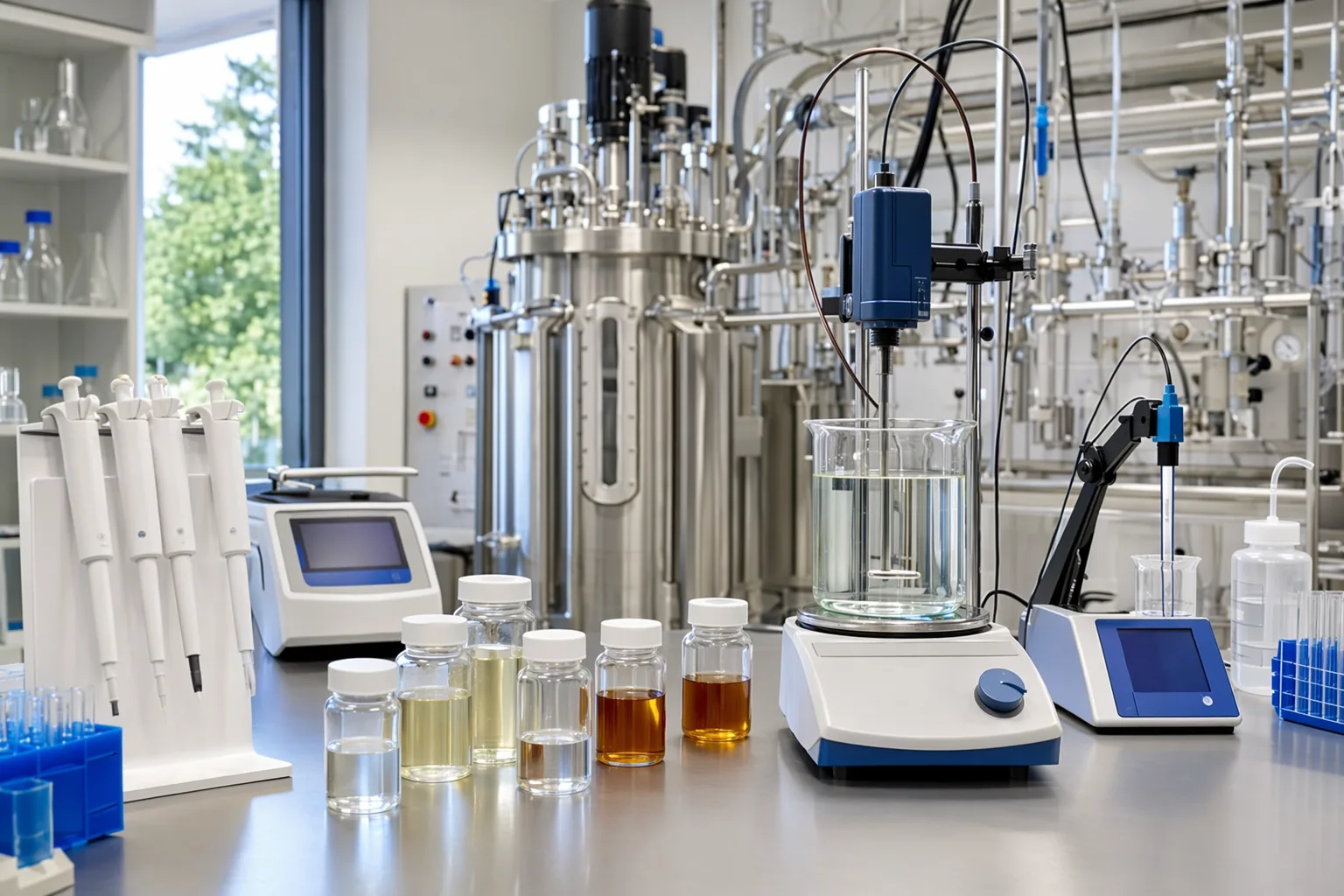
For manufacturers, formulators and resellers who need to prove an enzyme in their own process before a bulk order. Request a sample sized for replicated trials, the documents that come with it, and a quote for the production quantity at the same time, so the step from sample to supply is already priced.
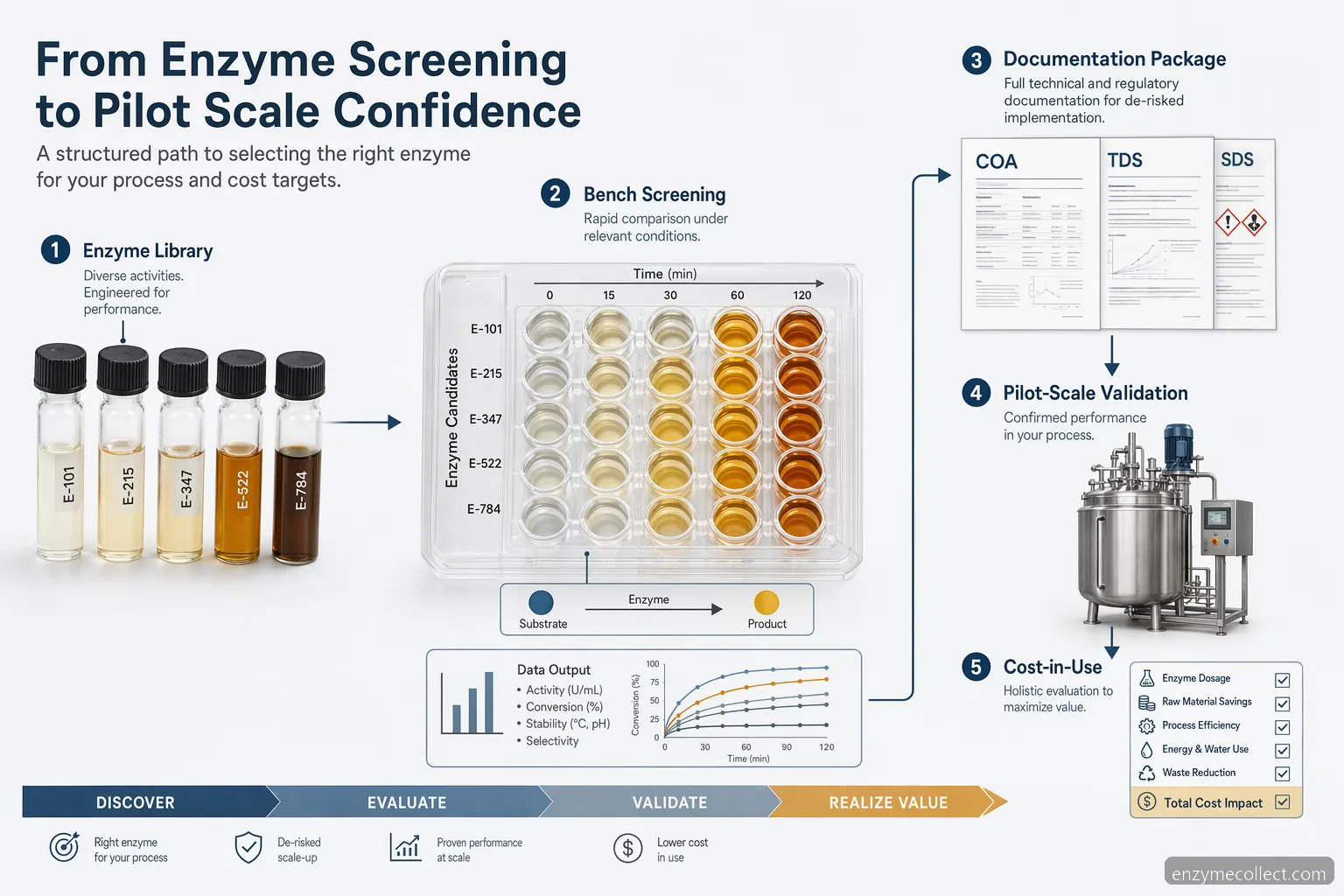
How to Scope an R&D Enzyme Sample Request
A strong industrial enzyme samples R&D request starts with the process, not the product name. Share the substrate or feedstock, target reaction, current chemistry, desired outcome, and constraints such as pH, temperature, salt, solvents, preservatives, shear, or cleaning steps. If the process involves food, feed, detergent, textile, pulp, wastewater, biofuel, or specialty chemical use, identify the intended market so the supplier can flag regulatory and documentation requirements. Request enough material for replicated tests, not just one beaker trial, and say how much you expect to buy if the trial succeeds.
State substrate concentration, solids level, and batch size. • Define the performance metric: yield, viscosity, conversion, cleaning, or COD reduction. • List incompatible materials such as oxidizers, high heat, or extreme pH. • Ask for storage life, recommended dilution, and handling guidance.
Sample, Trial Order, Then Bulk: Buying in Steps
A sample that performs well in a brochure condition may underperform in your real formulation or unit operation, because enzyme performance depends on substrate, pH, temperature, residence time, inhibitors and mixing. Buying in steps keeps the risk small: a sample for bench screening, a small trial order for repeat runs and a pilot, then the production quantity. Use the trial order to compare activity strengths against real substrates rather than model compounds, and capture performance, stability, handling and cost-in-use data together so purchasing can decide on one set of numbers.
Ask for the same lot, or a matched lot, for the sample and the trial order. • Keep retained material for a repeat check. • Get the bulk quote before the pilot, not after.
Bench Screening Conditions for Industrial Enzyme Samples Testing
Bench testing should isolate enzyme performance from unrelated variables. Run a no-enzyme control, a current-process control, and at least two dosage levels for each candidate, using the supplier's activity basis when one is given. Keep samples mixed uniformly, record residence time, and stop the reaction consistently by heat, pH shift, filtration, or another validated method. Hold all test vessels at the same controlled temperature, because enzyme activity and stability can change sharply with small differences. Use duplicate or triplicate runs when the result will influence scale-up or purchasing decisions.
Record pH at start and finish, not only after adjustment. • Use consistent substrate lots when possible. • Measure both performance gain and any unwanted side effects. • Retain samples for repeat analysis or customer review.
Documentation: COA, TDS, SDS, and QC Checks
Before using enzyme samples in R&D, request the documents that let technical, purchasing, safety, and quality teams evaluate the material. A COA should identify lot number, activity or potency by a stated method, appearance, and key release checks. A TDS should summarize application range, recommended pH and temperature, dosage guidance, storage, compatibility, and limitations. An SDS is required for safe handling and should be reviewed for dust, aerosol, sensitization, PPE, spill control, and disposal considerations. Useful incoming QC checks include appearance, odor, pH of solution, activity verification when a method is available, microbial limits where relevant, and packaging integrity. For supplier qualification, verify traceability, change notification practices, shelf-life support, and the ability to provide consistent lots for pilot validation and later production.
Confirm activity units and assay conditions before comparing suppliers. • Check whether the sample is liquid, granule, powder, or immobilized format. • Ask whether preservatives, stabilizers, or carriers are present. • Document storage temperature and retest date upon receipt.
From R&D to Pilot Scale Validation
Industrial enzyme samples pilot scale work should confirm that bench results survive real equipment, mixing, heat transfer, substrate variability, and downstream processing. Move to pilot only after the lab trial has a reproducible performance window and a practical dose. Pilot plans typically test one preferred enzyme, one backup candidate, and two or three dosage points around the lab optimum. Hold pH, temperature, residence time, solids, and agitation as close as possible to the intended process, then document deviations. Evaluate not only conversion or yield, but also filtration rate, foam, odor, color, viscosity, cleaning load, wastewater impact, and compatibility with preservatives or downstream chemicals. Pilot validation should produce a scale-up recommendation, provisional operating range, quality checkpoints, and a cost-in-use estimate for purchasing review.
Reserve enough sample for startup loss and repeat pilot runs. • Use plant-relevant water, substrate, and process aids. • Track enzyme addition point and dilution procedure. • Compare results against current process cost and throughput.
Cost-in-Use and Supplier Qualification
The lowest-priced enzyme sample is not always the lowest-cost option. Cost-in-use combines delivered price, effective dose, activity retention, yield improvement, cycle time, waste reduction, energy savings, rework reduction, and handling labor. In R&D, calculate a preliminary cost per ton of substrate, per batch, or per finished unit. Then test sensitivity around realistic dosage variation, because a product that works at half the dose may justify a higher unit price. Supplier qualification should consider responsiveness, technical support, documentation quality, lot consistency, packaging options, lead time, minimum order quantity, and ability to support scale-up from sample to commercial supply.
Compare total process economics, not only enzyme price per kilogram. • Ask for sample-to-production continuity where possible. • Confirm lead times for repeat orders and pilot quantities. • Document the decision criteria before commercial negotiation.
Example: Requesting an Alpha-Galactosidase Sample
Alpha-galactosidase (EC 3.2.1.22) from Aspergillus niger removes raffinose and stachyose in legumes, plant-based proteins, bakery fermentation and soybean meal. Our grade is specified at 1,000–50,000 GalU/g with optimal activity in pH 4.0–6.5 at 40°C–55°C, and is packed in 1 kg, 5 kg and 25 kg with an MOQ of 1 kg. A useful request names the raw material (soybeans, lentils, chickpeas, pea protein, sourdough, soybean meal), the end market (food, supplement or feed), the residual oligosaccharide target, and the monthly quantity after approval. That lets the activity grade, the sample and the first trial order be matched in one reply.
Technical Buying Checklist
Before you send a sample request: • Process and substrate described, with pH, temperature, residence time and solids. • Success metric written down (yield, conversion, viscosity, residual sugar). • Controls planned: no enzyme and current process. • Sample quantity covers controls, at least two doses, repeats and one confirmation run. • Document set requested with the sample: COA, TDS, SDS and the activity method. • Expected purchase quantity, pack size and destination stated, so the bulk quote arrives with the sample.
What to Send With Your Sample Request
Product or enzyme class, the application and raw material, the quantity you expect to buy per order or per month after a successful trial, preferred pack size, and the destination country. Add the process window and any materials the enzyme must tolerate. Price and lead time for the production quantity are quoted per order.
Alpha-Galactosidase for Research & Industry
Need Alpha-Galactosidase for your lab or production process?
ISO 9001 certified · Food-grade & research-grade · Ships to 80+ countries
Frequently Asked Questions
What information should I provide when requesting industrial enzyme samples for R&D?
Provide the application, substrate, process pH, temperature, solids level, residence time, batch size, target result, and any materials the enzyme must tolerate. Include current performance data if available, such as yield, viscosity, conversion, brightness, COD, or cleaning efficiency. Also state whether the request is for R&D, testing, pilot scale, or supplier qualification so the sample size and documentation match the decision stage.
How much enzyme sample is needed for a first trial?
Enough for controls, two or three dosage levels, duplicate runs, failed starts, retained material and one confirmation run under the best condition. Very concentrated products or microplate screens need less; slurries, high-solids substrates or pilot equipment need more. Share your substrate amount and test plan so the sample size supports meaningful data rather than a single one-off test.
How should I compare two enzyme candidates in the lab?
Use the same substrate lot, temperature, pH, mixing, dosage basis, residence time, and stop method. The comparison is only valid when the analytical method matches the intended reaction. Normalize by activity units when possible, but also compare real product dose, side effects, stability, and cost-in-use.
How do we troubleshoot poor enzyme performance in testing?
First confirm that pH, temperature, dosage, and contact time match the enzyme’s documented operating range. Then check for inhibitors such as oxidizers, preservatives, solvents, heavy metals, or extreme salt levels. Review mixing, substrate accessibility, and sampling method. If the endpoint is not aligned with the enzyme’s function, results may look weak even when the enzyme is active. Repeat with controls before rejecting the sample.
What should be reviewed before moving from sample testing to pilot scale?
Review reproducibility, optimum dose, operating pH and temperature, reaction time, substrate variability, downstream effects, handling safety, and documentation. Confirm that the supplier can support pilot quantities, repeat lots, lead times, and technical questions. Build a pilot protocol with controls and acceptance criteria, then calculate cost-in-use using expected dose, yield improvement, cycle time, waste impact, and delivered enzyme price.
Ready to source?
Request industrial enzyme samples for R&D, testing, or pilot scale evaluation with COA/TDS/SDS support. Include the quantity you would buy after a successful trial and the destination, and the bulk quote comes with the sample.
Contact Us to Contributehello@mail.enzymecollect.com